

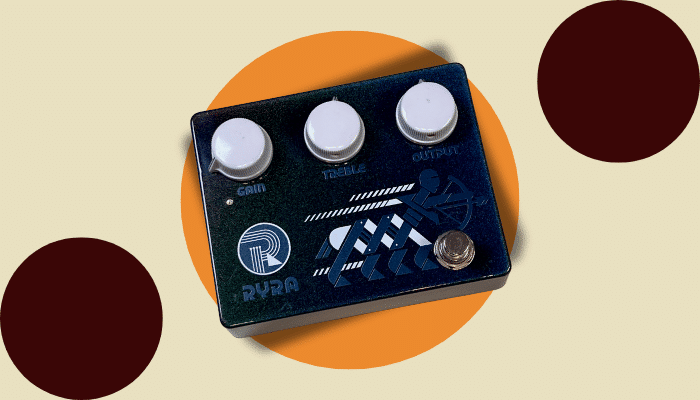
Got a Klon-style pedal and not hearing that magic, but it sounds… fine? Maybe even disappointing?
The issue isn’t the pedal. It’s how you’re using it.
After a lot of messing around with different Klon clones in various configurations, I’ve realised these pedals usually make the most sense once you hear them in the role they’re best at.
Set them wrong, and they’re underwhelming. Dial them in correctly, and they transform your entire rig.
In this guide, I’ll walk you through four specific ways showing how to use a Klon pedal (or Klon Clone) that take it from “just another overdrive” to the versatile pedal it’s meant to be. You’ll get exact Klon settings, practical context for when each approach works, and troubleshooting for the most common frustrations.
Note: The settings and examples in this guide are based on my Ryra The Klone pedal, though the principles apply to most Klon-style overdrives. Your specific pedal, amp, and guitar will respond differently. Use these settings as a starting point and adjust by ear.
What Makes Klon Pedals Different (And Why It Matters)
Before diving into settings, you need to understand one critical thing about Klon-style pedals: they’re designed to enhance your existing tone, not replace it.
Unlike many overdrives that add a lot of their own character, a Klon uses a clean blend circuit that mixes your dry signal with the overdriven signal.
At lower gain settings, you hear more of the clean signal blended in. As you increase gain, the clean signal is gradually reduced, giving you more saturation. That’s the core reason Klons can sound clear even when they’re adding drive: you keep more of your pick attack and note shape.
The other thing worth knowing is that many Klon-style pedals are buffered (or have a buffer), which keeps your signal strong across long cable runs and complex pedalboards. This can be great for maintaining clarity, but it can affect some vintage-style fuzzes. We’ll cover that in the stacking section later.
Quick control reference for Klon-style pedals:
- Gain = amount of dirt
- Treble = brightness/upper-mid presence
- Volume = output level (boost)
Understanding these characteristics explains why the following settings work the way they do.
Setting #1: Clean Boost Into Your Amp
This is the Klon’s bread and butter, and honestly, what it was originally designed for. Set with minimal gain and increased volume, a Klon pushes your amp harder without drastically changing your core tone.
When This Works Best
The clean boost approach shines when your amp is already on the verge of breakup. That sweet spot where it’s mostly clean but starts to crunch when you dig in. Hitting it with a Klon pushes it over the edge into rich, natural overdrive.
It’s also perfect as a solo boost. Even into a completely clean amp, kicking on a Klon with the settings above gives you a volume lift with a slight midrange bump that helps you cut through the mix. Your guitar and amp still sound like themselves. Everything is just louder and more present.
Recommended Settings
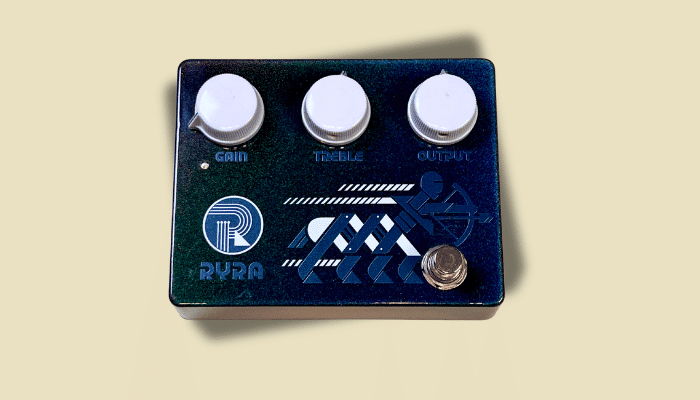
- Gain: 8-9 o’clock (as low as possible)
- Treble: 12-1 o’clock
- Volume: 12-2 o’clock (above unity)
Unity gain is often somewhere around noon on the volume knob, but it varies by pedal. Set it by ear at gig volume if you can. That’s the point where the pedal is exactly as loud when engaged as when bypassed. Pushing beyond unity gives you that extra decibel or two that drives the amp harder, which is where the magic happens.
Start with the treble around noon and adjust from there. If your boosted tone sounds harsh or ice-picky, roll it back. If things get muddy or dark, increase it for more clarity. The goal is adding presence without making your tone brittle.
Common Mistakes to Avoid
The biggest error I see is running the volume below unity gain. When you do this, your boosted tone actually gets quieter and smaller sounding. It disappears in the mix rather than punching through. Many players find Klons sound best at unity or above, because the circuit’s feel and EQ come alive when it’s not “turned down.”
The second mistake is over-trebling with already bright amps. If you’re playing a Fender-style amp with single coils, you might need the treble at 10-11 o’clock rather than noon. Let your ears guide you. The boost should feel bigger, not harsher.
Finally, don’t expect heavy transformation at bedroom volumes through a pristine clean amp. Klons reveal their character when pushed. Let your amp work a bit and you’ll hear what the pedal actually does.
Setting #2: Transparent Overdrive Tone
While famous as a boost, Klon-style pedals also work beautifully as standalone low-to-medium gain overdrives. This is where that “transparent” descriptor gets thrown around. Though let’s be honest, it’s not perfectly transparent.
You’ll absolutely hear the Klon’s character: that midrange presence, the particular way it compresses, the slight EQ shift it brings. But unlike heavily colored overdrives that stamp their personality all over your tone, a Klon lets your guitar and amp’s core voice come through. You’re adding the Klon flavor, not replacing everything with it.
And that’s exactly what makes it useful.
Check out “What Is a Transparent Overdrive Pedal?” to learn what “transparent” really means. And how to pick one that fits your tone.
Finding the Sweet Spot
To use your Klon as an overdrive, start increasing the gain knob from its minimum position toward noon. You’ll notice the pedal transition from slight grit to thicker, more saturated drive.
Most players find their sweet spot somewhere between 11 o’clock and 1 o’clock on the gain knob. This range gives you a responsive, chewy overdrive that’s perfect for rhythm crunch or bluesy leads. Lower in that range (11 o’clock) keeps things articulate with excellent note separation. Higher (1 o’clock) delivers more compression and sustain.
Remember that clean blend circuit? As you turn up the gain, less of your dry signal gets mixed in, giving you a more pure overdriven tone. This is why the Klon maintains clarity even at higher gain settings. The circuit is designed to preserve your attack and note definition.
Recommended Settings
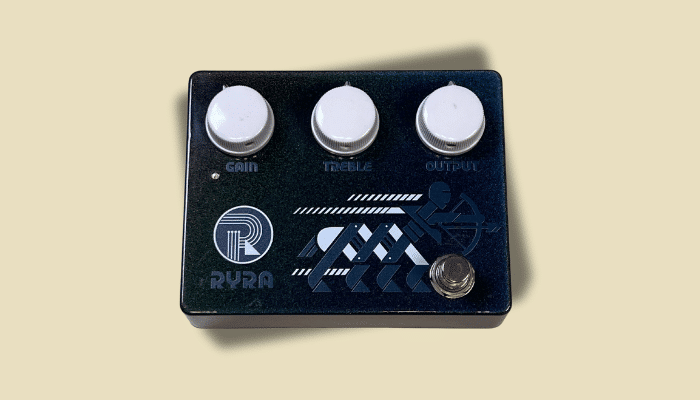
- Gain: 11-1 o’clock
- Treble: 10-2 o’clock (amp-dependent)
- Volume: 12-1 o’clock
Keep the volume at unity or slightly above. Running any overdrive too quiet makes your tone small and weak. You lose body and presence. The Klon should feel full and confident when engaged, not like you’re turning your amp down.
For the treble control, listen to your amp’s natural voice. Bright amps (most Fenders) might need the treble at 10-11 o’clock to avoid harshness. Darker amps (think Marshalls) can handle 1-2 o’clock for added sparkle and cut.
Volume knob tip
Try leaving the Klon on and just use your guitar’s volume knob at 6-9. The pedal cleans up beautifully this way, giving you multiple tones from one setting.
Pickup consideration
Single coils may benefit from slightly higher gain (12-1 o’clock) and lower treble to add body. Humbuckers typically need less gain (11-12 o’clock) since they’re already thicker sounding.
What to Expect (And What Not To)
Here’s the reality: a Klon-style pedal wasn’t designed to be a high-gain pedal into a completely clean amp. If you’re looking for heavy distortion at low volumes through a solid-state practice amp, this isn’t the pedal for that job.
What you will get is a dynamic, amp-like overdrive that responds to your playing. It cleans up when you roll back your guitar’s volume and gets grittier when you dig in. This touch sensitivity is what makes Klons feel so natural under your fingers.
The pedal works better with amps that have some character. Whether that’s tube warmth, a touch of breakup, or even just a voice you like. Into those amps, the Klon’s overdrive feels like a natural extension of what’s already there.
Check out “10 Best Guitar Amps for Pedals: Top Tube Pedal Platform Amps Under $1000” to find budget-friendly tube amps that take drives, delays, and mods like a champ.
Setting #3: Always-On Tone Enhancer
Using a Klon-style pedal as an always-on pedal, is an approach that separates casual Klon users from devotees. Instead of treating the pedal as an effect you kick on for specific parts, you leave it engaged all the time as a foundational part of your tone.
Why Players Run Klon Always-On
Set with minimal gain and a slight volume boost, a Klon acts like a high-quality preamp or tone sweetener. It adds subtle compression, a touch of midrange focus, and a certain “alive” quality that’s hard to describe but immediately noticeable when you turn it off.
If your pedal has a buffer (many do), this helps maintain high-end detail across long cable runs and complex pedalboards. Your tone stays clear and articulate no matter what’s in your chain.
Explore “True Bypass vs Buffered Bypass Guitar Pedals” to learn when each matters, what “tone suck” really is, and how to build a signal chain that stays clear.
Many players describe this as making their clean tone feel more three-dimensional and responsive. There’s a slight grit at the edge, but mostly it’s about enhancement.
Recommended Settings
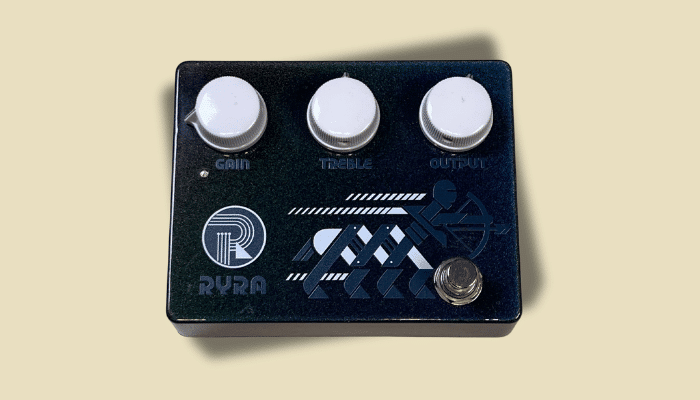
- Gain: 8-9 o’clock (barely breaking up)
- Treble: Compensate for your amp’s character
- Volume: 12:30-1 o’clock (+1-2dB above unity)
The gain should be set low enough that you’re barely adding dirt. You want just a hint of texture. The volume provides a small lift that makes your overall tone feel more present without being obviously louder.
For treble, this is where you balance your guitar and amp combination. Playing a bright guitar or amp? You might want the treble around 10 o’clock to tame some harshness. Running a darker guitar and amp combo, turn it up to 2 o’clock to add some clarity.
How to Dial It In
Start with the pedal bypassed and play for a minute. Really listen to your base tone (the good and the not-so-good).
Now engage the pedal with the settings above. Adjust the volume until the difference is barely noticeable. Just a hair louder and slightly more present. Then fine-tune the treble until the pedal seems to “disappear” into your sound. You’re not looking for obvious change. You want subtle enhancement.
The test: turn the pedal off again. If you immediately miss it, if your tone suddenly feels a little flat or lifeless by comparison, you’ve nailed the always-on setting. That’s when you know the Klon is doing its job.
Setting #4: Stacking With Other Drive Pedals
In my opinion, this is where Klons really earn their reputation as pedalboard workhorses. They stack exceptionally well with other overdrives, distortions, and even fuzzes, opening up a world of complex gain tones.
The key is understanding that pedal order matters. Running a Klon before or after another drive pedal produces completely different results.
Check out our article “Klon Before or After Bluesbreaker?” to see how the order changes gain, EQ, and feel.
Klon Before Another Overdrive
Placing the Klon first in your drive chain means it pre-shapes and boosts the signal going into your second pedal. The Klon’s midrange emphasis and slight compression hit the input of the next drive stage, resulting in more focused, saturated distortion.
This is the most popular stacking approach. Set your Klon to moderate gain (10-12 o’clock) as your base rhythm tone, then kick on the second pedal when you need more drive for solos or heavy sections.
Recommended approach:
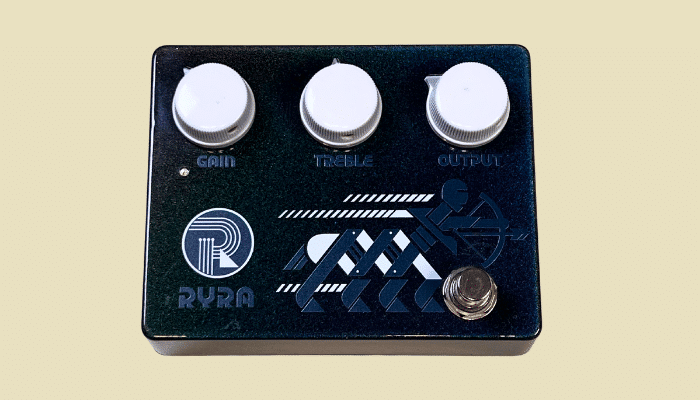
- Klon Gain: 10-12 o’clock
- Klon Treble: to taste
- Klon Volume: unity
- Second pedal: Less gain than you’d normally use (the Klon is already pushing it)
This order works brilliantly with Tube Screamers, Blues Drivers, and Marshall-style pedals. The Klon tightens the response and adds articulation, while the second pedal provides additional saturation and its own tonal character. You get the best of both worlds. Cut and thickness without losing note definition.
Klon After Another Overdrive
Using the Klon as your second drive pedal means it’s acting more as a boost and tone shaper for whatever comes before it. This is slightly less common but incredibly effective for solo boosts.
In this setup, your first pedal generates the dirt character you want, and the Klon (set with low gain and higher volume) makes that tone bigger, clearer, and louder without drastically changing its nature.
Recommended approach:
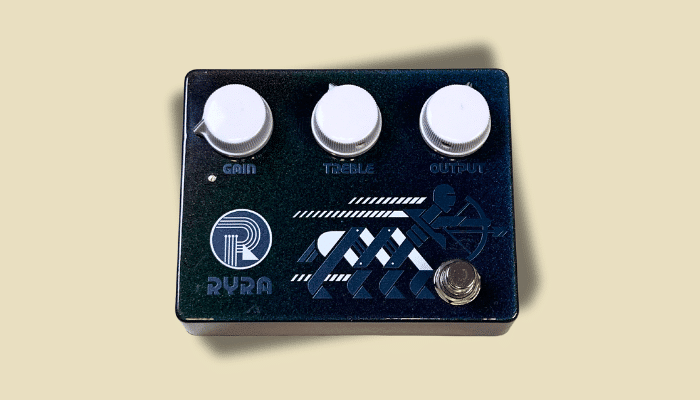
- First pedal: Set for your desired drive tone
- Klon Gain: 8-9 o’clock
- Klon Treble: Adjusted for clarity
- Klon Volume: 1-3 o’clock
This order is great when you need that final push to make your lead lines jump out of the mix. Because the Klon is amplifying the harmonic content already generated by the first pedal rather than creating new overdrive, you get a harmonically rich tone that feels like a louder, more present version of your base sound.
Stacking with Fuzz
Fuzz and Klon combinations can sound fantastic, but there’s one thing to watch for: many Klon-style pedals are buffered, and vintage-style fuzz circuits (especially Fuzz Faces and Tone Benders) can react poorly to buffered signals. The impedance interaction can make the fuzz sound thin, splatty, or just wrong.
In my opinion, the safest order is:
Fuzz → Klon → Amp
If your Klon clone (Klone) is true-bypass, order may be less of an issue. But fuzz-first is still the safest starting point.
In this order, the Klon acts as a tonal control for your fuzz, adding midrange focus and definition. Many fuzzes sound woolly and indistinct on their own, especially through clean amps. The Klon tightens things up and helps the fuzz cut through without losing that beautiful harmonic chaos.
Set the Klon with minimal gain (8-9 o’clock) and adjust the treble to balance the fuzz’s natural character. If your fuzz is dark and thick, push the Klon’s treble higher for clarity. If the fuzz is already bright and aggressive, roll it back to avoid harshness.
Classic Combinations Worth Trying
Klon + Tube Screamer: The most tried-and-true pairing in boutique pedal circles. Either order works, but Klon → TS gives you maximum saturation with excellent articulation. Start with both pedals at moderate settings and adjust from there.
Klon + Bluesbreaker-style: This combination is legendary among gain-stacking enthusiasts. The Klon brings clarity and midrange punch, while the Bluesbreaker adds warm, touch-sensitive drive. Together they retain note separation even at high gain. Klon → Bluesbreaker is most common for maximum definition.
Klon + RAT or high-gain distortion: Using a Klon after aggressive distortion pedals helps tame their sometimes harsh high-end while adding a volume boost for solos. Set the Klon with very low gain (almost clean boost) to avoid over-saturating the signal.
Where to Put a Klon in Your Signal Chain
Beyond stacking order with other drives, here’s where a Klon typically sits in your overall pedalboard:
- After tuner and wah (if you use them)
- Before modulation, delay, and reverb
- In your drive section, which usually comes early in the chain
If you’re stacking drives, decide whether the Klon is your “foundation drive” (place it earlier) or your “solo lift/EQ shaper” (place it later). For always-on use, some players prefer it last in the drive section, right before time-based effects, so it acts as a final tone sweetener.
Which Klon Setting Should You Start With? (Best Klon Settings by Amp Type)
The best klon settings depend on your amp and what role you want the pedal to play. Here’s how to match settings to your rig:
If you have a clean amp you want to stay mostly clean: Start with Setting #2 (transparent overdrive). Set the gain around 11-12 o’clock to get your drive tones from the pedal itself.
If you have an amp that’s already breaking up: Start with Setting #1 (clean boost). Use the Klon to push your amp into richer overdrive for leads and heavier sections.
If you have other drive pedals on your board: Start with Setting #4 (stacking). Place the Klon before your favorite overdrive and use it to enhance that pedal’s character.
If you’re not sure or want the most versatile starting point: Start with Setting #3 (always on). This lets you hear what the Klon actually does to your tone before committing to a specific role. After a few days of playing with it alwaysengaged, you’ll know whether you want more boost, more drive, or something in between.
The beautiful thing about Klon-style pedals is that they’re flexible enough to serve multiple roles. Don’t feel locked into one approach. Adjust based on the song, the venue, or just your mood that day.
Common Klon Settings Problems (And Fixes)
Even with clear guidance, you might run into issues. Here are the most common frustrations and how to solve them.
“My Klon Sounds Too Harsh”
Likely cause: Treble is set too high for your rig, or you’re stacking with another bright pedal.
Fix: Roll the treble back to 10-11 o’clock and test again. If you’re stacking pedals, make sure you’re not combiningmultiple treble-boosting circuits—that’s a recipe for ice-pick tones. Also check your gain setting. Running the gain high into a very clean amp can sometimes produce a buzzy, harsh character that doesn’t sound musical.
“It Sounds Thin or Buzzy”
Likely cause: Volume is set too low (below unity).
Fix: Increase the volume knob to at least 12 o’clock and adjust upward from there. Many players find Klons sound best at unity or above because the circuit’s feel and EQ come alive when it’s not turned down too low. When you run it too quiet, you lose the body and weight that makes the pedal special. If the volume is already high and it still sounds thin, you might benefit from running it before another overdrive rather than on its own.
“I Don’t Hear Any Difference”
Likely cause: Settings are too subtle, or you’re not pushing the amp enough.
Fix: Start with more extreme settings to really hear what the pedal does. Try gain at noon, volume at 2 o’clock, and play for a minute. Once you’ve heard the obvious effect, you can dial it back to more subtle settings. Also make sure your amp has some volume. Klons reveal their character better at moderate to loud levels than at whisper-quiet bedroom volumes.
“It Gets Lost in the Mix”
Likely cause: Not enough volume or midrange presence.
Fix: Increase the output level and make sure the treble is set appropriately for cut. If you’re using the Klon as a standalone overdrive into a very clean amp, consider switching to the clean boost approach instead. Pushing the amp into its own overdrive often sounds bigger and more present than relying solely on the pedal’s clipping. Also, check your signal chain. If the Klon is early in the chain, followed by buffered pedals or long cables, you might be losing high-end detail.
Putting It All Together
The best klon settings come from understanding that it’s not just an overdrive. It’s a boost, a preamp, and a tone shaper, depending on how you set it.
Pick the setting approach that matches your rig: clean boost for amps on the edge of breakup, transparent overdrive for clean platforms, always-on for foundational tone enhancement, or stacking for complex gain structures. Start with the preset settings I’ve provided, then adjust the treble control to balance your amp’s character.
The most important thing to remember: many players find Klons sound best at unity or above because the circuit’s feel and EQ come alive when it’s not turned down. A Klon set too quiet loses the fullness and presence that makes it special.
Don’t expect instant magic at bedroom volumes through a pristine clean amp. These pedals reveal their character when you let them interact with your amp. When both the pedal and amplifier are working together. Give them some room to breathe.
Your ears will tell you what works.
FAQ
What should I set my Klon pedal to?
Start with Gain at 9 o’clock, Volume at 1 o’clock, and Treble at noon. This gives you a clean boost with slight tonal enhancement. From there, adjust based on your amp and pickups. Brighter rigs need less treble, darker rigs can handle more. If you want overdrive rather than boost, increase the gain to 11-1 o’clock and keep the volume around unity.
Is a Klon a clean boost or overdrive?
Both, depending on how you set it. With the gain low (8-9 o’clock) and volume up, it’s a clean boost. With the gain higher (11 o’clock to 1 o’clock), it’s a transparent overdrive. The beauty of Klon-style pedals is their versatility. They can handle multiple roles on the same pedalboard.
Should I run my Klon before or after other pedals?
Before other overdrives for more saturation and midrange kick, after for volume boost and tone shaping. The “correct” order depends on what you’re trying to achieve. If you want maximum drive and articulation, run Klon first. If you want your other pedal’s character with added presence and volume, run Klon second. For fuzz, always place the fuzz first due to potential buffer issues with many Klon-style pedals.
Why does my Klon clone sound different than expected?
Klon pedals often need volume above unity to sound full and present. If you’re running it too quiet or using it at bedroom levels through a pristine clean amp, it can sound underwhelming or even harsh. Try increasing the output level and letting your amp work a bit—the interaction between pedal and amp is where the magic happens. Also check that you’re not expecting high-gain distortion, which isn’t what these pedals were designed to do.
Can I use a Klon as my only overdrive?
Yes, at gain settings between 11-1 o’clock, a Klon works fine as your sole overdrive pedal. It excels at low-to-medium gain drive tones and cleans up beautifully with your guitar’s volume knob. That said, it performs better into amps withsome character than ultra-clean solid-state amps. If you need heavy distortion for metal or hard rock, you’ll want something more aggressive—but for blues, rock, country, and everything in between, a Klon can absolutely be your only dirt pedal.
What are the best klon settings for beginners?
For beginners, start with the clean boost preset: Gain at 9 o’clock, Volume at 1 o’clock, Treble at noon. This is one of the best klon settings to hear what the pedal does without overwhelming your tone. From there, adjust based on whether you want more drive (increase gain) or more transparency (keep gain low, volume up).
