Dynamics and Filtering
What Is an EQ Pedal? Guitar EQ Pedals Explained Simply
Before you buy another guitar or amp, learn how a single equalizer pedal can solve the tonal problems that basic bass, mid, and tr...
11 min read
Feb 22, 2026

Dynamics and filter pedals shape how your guitar signal responds before it reaches the rest of your rig. Explore practical guides to compressors, noise gates, EQ pedals, and wah, covering how each works, where it belongs in your signal chain, and how to dial it in for your playing style.
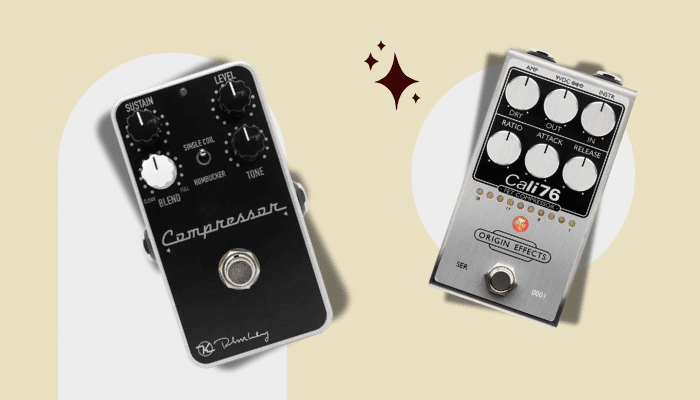


Dynamics and filter pedals are the foundation of a well-controlled guitar tone. Compressors even out your volume and add sustain. Noise gates keep unwanted hum and hiss in check. EQ pedals give you surgical control over your frequency balance. And wah pedals let you sweep through frequencies in real time for expressive, vocal-like sounds. These aren’t the flashiest effects on your board, but they’re often the difference between a polished, professional sound and a noisy, uncontrolled one.
If you’re new to this side of your pedalboard, start with our ultimate compressor pedal guide. Compression is the most widely used dynamics effect and the best entry point for understanding how these tools shape your signal. If you already use a compressor and want to explore tone shaping further, our guides to how EQ pedals work and how to use a wah pedal cover the filter side of this category in detail.
Where these pedals sit in your signal chain matters as much as which ones you choose. Compressors and wah typically go early in the chain, before gain pedals, while EQ and noise gates can serve different roles depending on placement. You’ll find those decisions covered across our signal chain and pedal order guides, which pair naturally with the content here.
Dynamics pedals and filter pedals both shape your signal before it hits gain, modulation, or time-based effects, but they do fundamentally different jobs. A compressor manages your dynamic range, reducing the gap between your loudest and quietest notes. It controls threshold, attack, and release to determine how and when compression kicks in. A noise gate does the opposite job: instead of evening out your playing, it silences the signal entirely when it drops below a set level, cutting hum and hiss between notes. Together, a compressor and noise gate can give you a tight, clean signal that feels polished without losing musical expression. Our guide to noise gate placement relative to compressors breaks down the two most common configurations and when each works best.
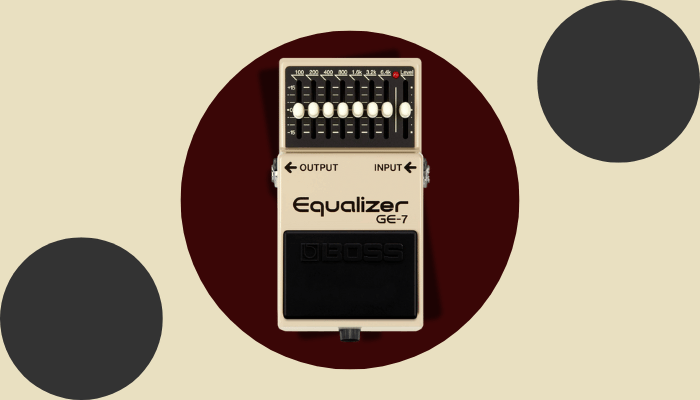
If you play funk, country, or fingerstyle, a compressor should be your first pick. It adds sustain, evens out your picking dynamics, and gives clean tones a glassy, polished quality that’s hard to achieve any other way. For players dealing with noise problems in high-gain rigs, a noise gate or suppressor is the more immediate need. Our noise gate vs suppressor guide explains the difference and helps you choose. For tone shaping, an EQ pedal is one of the most underrated tools on any pedalboard. A graphic EQ like the Boss GE-7 or MXR 10-band EQ can fix muddy or harsh tones, boost a solo frequency range, or adapt your sound to different rooms and venues.
These pedals also interact closely with your gain pedals. A compressor before an overdrive fattens and sustains the signal feeding into it. An EQ after distortion lets you sculpt the tone without changing the drive character. And a noise gate after high-gain pedals keeps everything tight without killing your pick dynamics. Understanding these interactions is where dynamics and filter pedals go from utility tools to genuine tone-shaping weapons.
Dynamics pedals control your signal’s volume behaviour. Compressors even out loud and quiet notes, noise gates silence unwanted hum, and boost pedals raise your overall level. Filter pedals shape your frequency content, including wah pedals that sweep through frequencies with your foot and EQ pedals that boost or cut specific frequency bands. Our compressor pedal guide is the best starting point for understanding how dynamics effects work.
Place your compressor early in the chain, after your tuner and wah but before gain pedals. This lets it process a clean signal and control dynamics before distortion adds colour. EQ is more flexible: after gain pedals it sculpts your driven tone, while in your amp’s effects loop it shapes your overall sound. Our pedalboard setup guide covers placement for every pedal type.
If you play funk, country, or fingerstyle, a compressor is close to essential. It adds sustain, balances your picking dynamics, and gives clean tones a polished, professional quality. For high-gain rock and metal, compression is less critical since distortion naturally compresses your signal. Our guide on how to get the most from your compressor pedal covers settings for different genres and playing styles.
Both shape your frequency content, but in very different ways. A wah pedal sweeps a narrow bandpass filter in real time with your foot, creating expressive, vocal-like sounds. An EQ pedal boosts or cuts fixed frequency bands for static tone sculpting, like removing mud or adding presence. Our guides to using a wah pedal and understanding EQ pedals explain each in detail.