
Start here
Overdrive vs Distortion vs Fuzz: The Complete Gain Pedal Guide
Signal clipping, legendary rigs, and genre-specific settings explained, so you can stop guessing and start building a gain tone that’s genuinely yours.
45 min read

Gain pedals shape more of your guitar tone than any other effect. These guides cover overdrive, distortion, and fuzz from the ground up, including how each type works, iconic circuits worth knowing, stacking strategies, and how to choose the right gain pedal for your playing style.
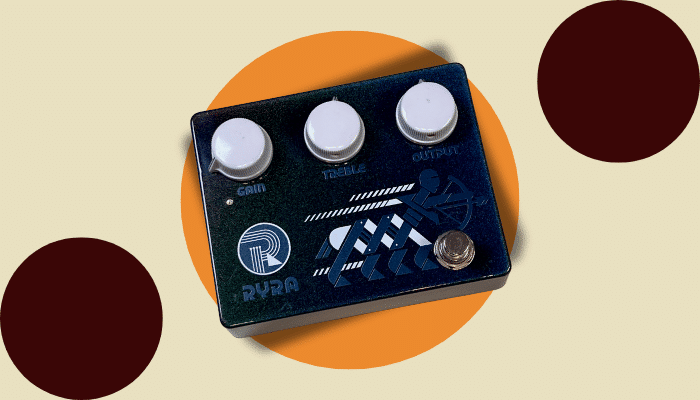


Gain pedals are the foundation of electric guitar tone. Whether you’re after smooth blues breakup, crushing metal saturation, or wild fuzz textures, overdrive, distortion, and fuzz pedals all achieve their sound by clipping your guitar’s signal in different ways. Understanding those differences is the single most useful thing you can learn about effects. It changes how you choose pedals, how you set them up, and how you interact with your amp.
If you’re new to gain pedals, start with our complete guide to overdrive, distortion, and fuzz. It explains how all three types work, what they sound like, and which suits different genres and playing styles. If you already know the basics and want to go deeper, our guides on how to use a Klon pedal and Klon and Bluesbreaker stacking order cover specific circuits and how to combine them for more complex tones.
How you use gain pedals depends heavily on the rest of your rig. Where they sit in your signal chain, how they interact with your amp, and how they respond to your guitar’s volume knob all matter. You’ll find those topics covered across our signal chain and pedal order guides, which pair naturally with the content here.
The most important distinction between overdrive, distortion, and fuzz is how they clip your signal. Overdrive uses soft clipping to produce warm, dynamic breakup that responds to your picking and your guitar’s volume knob. It’s the most versatile type of gain pedal and the best starting point for most players. Distortion uses hard clipping for a tighter, more compressed, and more aggressive sound that stays consistent regardless of how hard you play. Fuzz pushes clipping to the extreme, turning your signal into a buzzing, harmonically rich square wave. Each type interacts differently with your amp, your pickups, and the other pedals on your board.
Once you understand the basics, gain stacking opens up a whole new dimension. Running a lower gain overdrive into a higher gain distortion tightens the low end and adds articulation. A Tube Screamer into a high gain amp is one of the most proven combinations in rock and metal for exactly this reason. Stacking a fuzz into an overdrive restores the midrange that fuzz pedals naturally scoop, helping you cut through a band mix. The key principle is that each pedal in the chain shapes the signal before it hits the next, so order matters as much as the pedals themselves. Our pedalboard setup guide covers signal chain placement for every effect type.
It’s also worth understanding how gain pedals interact with your guitar’s controls. Many overdrives and vintage germanium fuzz circuits clean up dramatically when you roll back your volume knob, giving you a full range of tones from a single pedal. Our guide to volume knob techniques for gain pedals covers this in detail. And if you’re still choosing your first gain pedal, our best pedals for beginners guide includes a specific overdrive recommendation with starter settings to
All three are gain pedals that clip your guitar signal, but they do it differently. Overdrive uses soft clipping for smooth, amp-like breakup. Distortion uses hard clipping for tighter, more aggressive saturation. Fuzz pushes clipping to the extreme for a buzzy, harmonically rich tone. Our complete gain pedal guide breaks down how each type works with audio examples and buying recommendations.
Start with an overdrive pedal. It’s the most versatile type of gain pedal, it cleans up with your guitar’s volume knob, and it stacks well with other effects. A Boss SD-1 or Ibanez Tube Screamer is an excellent first choice at any budget. Our beginner’s guide to guitar pedals includes specific overdrive recommendations and starter settings.
Yes. Gain pedal stacking is one of the most effective ways to shape your tone. Running a lower gain overdrive before a higher gain distortion tightens the bass and adds clarity, which is why the Tube Screamer into a high gain amp is such a proven combination. Our gain pedal guide covers stacking strategies, pedal order, and recommended combinations.
Place gain pedals after your tuner and compressor but before modulation, delay, and reverb. This lets your time-based effects process an already shaped tone for cleaner, more natural results. Fuzz pedals often need to go first in the entire chain due to impedance sensitivity. Our pedalboard setup guide explains placement for every effect type with diagrams.