Plug a germanium Fuzz Face into the wrong amp and it lets you know. It sputters. It gates out halfway through a note. Let it get too warm or too cold and it comes back a different pedal, thinner or mushier, like it’s sulking about something. I run one. It is not a plug-and-play fuzz pedal, and it never will be.
Most players call that temperament. I call it inheritance.
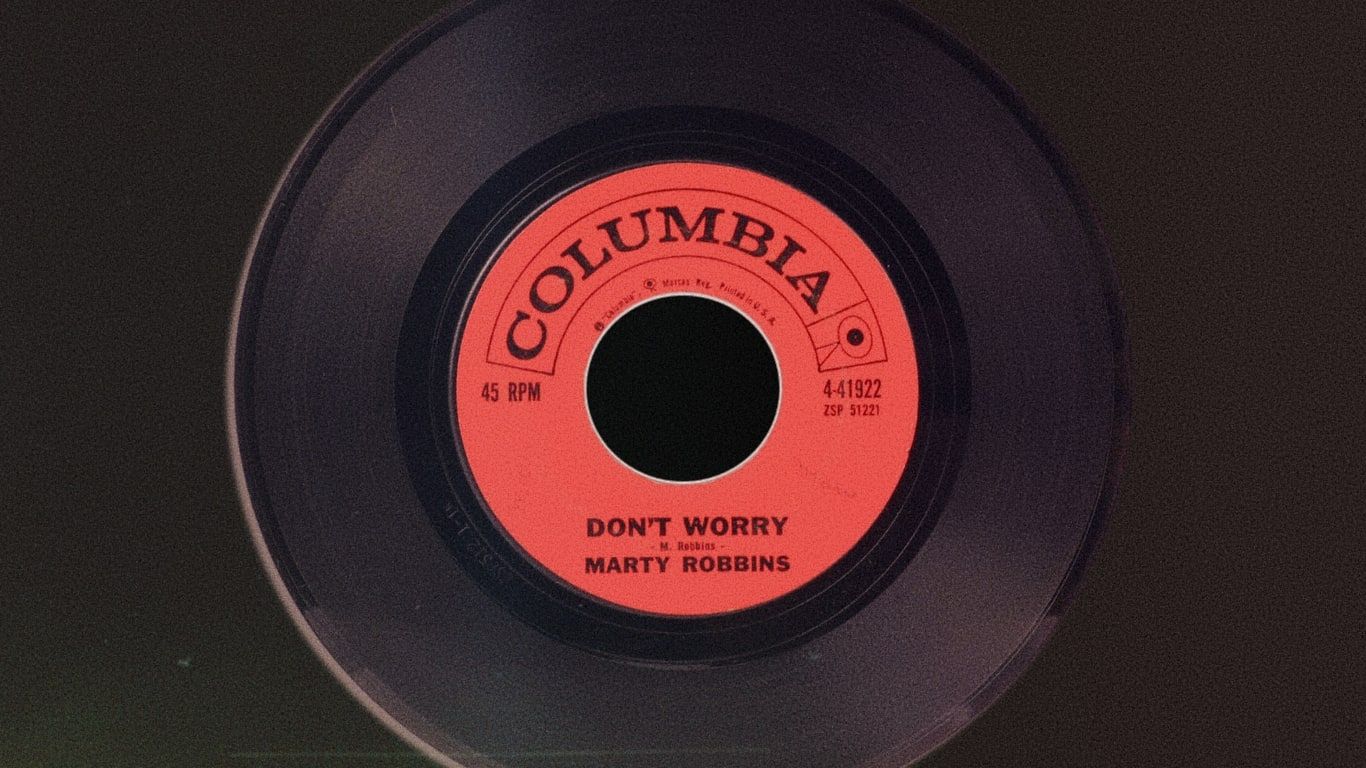
Rewind to July 1960, a Nashville studio everyone called the Quonset Hut. Grady Martin is playing a six-string bass straight into a mixing desk on a Marty Robbins ballad, and somewhere inside that desk a transformer is dying. It starts to arc. What comes out is a buzzing, splatty snarl nobody asked for, and it ends up on a number one record.
That’s where fuzz comes from. Not a design. A fault. Every fuzz pedal you’ve ever stepped on is a copy of it, which is exactly why they still behave like broken things.
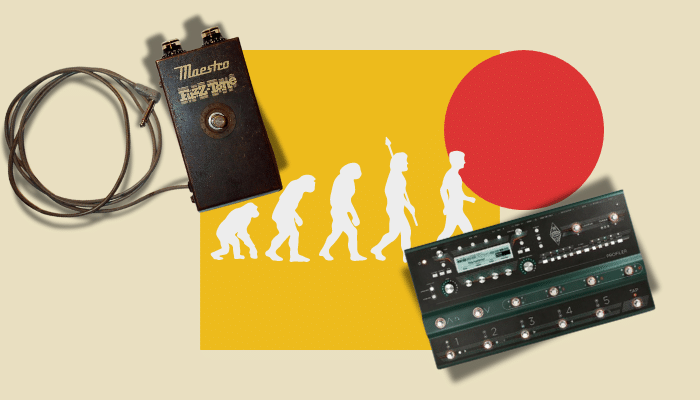
The first fuzz pedal was the Maestro Fuzz-Tone (model FZ-1), released by Gibson in 1962. Nashville engineer Glenn Snoddy built it with fellow engineer Revis Hobbs, and it existed for one reason: to recreate, on demand, the accidental distortion on Marty Robbins’ “Don’t Worry.” The first fuzz pedal wasn’t an invention. It was a malfunction you could buy.
Key Takeaways
- Fuzz started as a fault: a failing transformer in a Nashville studio console while Grady Martin played bass on Marty Robbins’ “Don’t Worry” in July 1960.
- The first fuzz pedal, the Maestro Fuzz-Tone FZ-1, arrived in 1962. Engineer Glenn Snoddy built it with Revis Hobbs to recreate that fault on demand, and Gibson sold it.
- It flopped. Shops took around 5,000 units and players left them on the shelf until the Rolling Stones’ “Satisfaction” made fuzz a hit in 1965.
- The Sola Sound Tone Bender (1965) and the Dallas Arbiter Fuzz Face (1966) both trace back to the Maestro, so every classic fuzz pedal is a copy of a copy of that original fault.
- That’s why fuzz is still temperamental. It was built to sound broken.
Where the Fuzz Sound Came From: A Dying Transformer
Grady Martin was the kind of session player you’ve heard a hundred times without once hearing his name. He played the Spanish guitar on Marty Robbins’ “El Paso.” He’d later spend years in Willie Nelson’s band. In Nashville, if a producer needed a part played perfectly and then forgotten, they called Grady.
Which makes it funny that the one thing he’s remembered for is a sound he didn’t play on purpose.
The “Don’t Worry” session ran on 12 July 1960 at Bradley Film & Recording, the Quonset Hut’s proper name. Martin was on a Danelectro UB-2, a six-string bass tuned an octave under a guitar, plugged directly into the console. No amp. No speaker to blame. Just the desk.
Inside the desk sat a Langevin transformer from a bad batch. Engineer Glenn Snoddy later explained what went wrong: one of its windings failed open, and with around 250 volts behind it, current started arcing across the gap. Martin’s clean bass went in one side. Something torn and splattering came out the other.
Nobody agrees on what happened next. Some say Martin hated it and wanted another take, and producer Don Law overruled him. Snoddy remembered Martin shrugging and asking why they didn’t just keep it. Either way, it stayed.
And it worked. “Don’t Worry” spent ten weeks at number one on the country chart and reached number three on the pop chart, with a broken component snarling in the middle of a love song, two years before anyone could buy a fuzz pedal.
Then the transformer finished dying, and the sound went with it.
Who Invented the Fuzz Pedal? An Engineer Faking a Fault
Glenn Snoddy did, with help from Revis Hobbs. The reason he did it is the good part, because it basically comes down to customer complaints.

Once “Don’t Worry” hit, other artists started ringing the studio. They wanted the buzz on their records too. Snoddy had to keep telling them the same thing: the part that made it was dead, and there’s no setting on a mixing desk called “broken.”
So he did what engineers do when they’re told something can’t be done. He got annoyed, then he got a soldering iron. Snoddy and Hobbs, a fellow engineer at Nashville’s WSM, built a small circuit around a few germanium transistors that took a clean signal and deliberately clipped it into a ragged square. A failure, reverse-engineered. They sold the design to Gibson, and in 1962 it went on sale under Gibson’s Maestro brand as the Fuzz-Tone FZ-1.
That’s who invented the fuzz pedal. Not the guitarist. Not the rock star. Two engineers trying to get a fault to show up on cue.
Martin, for his part, may have given the thing its name. In January 1961 he cut an instrumental called “The Fuzz,” and that title is the likeliest source of the word every pedal company still prints on the box.
Here’s the strange bit. Gibson didn’t sell the Fuzz-Tone as what it was. The patent and the pitch both framed it as a way to make your guitar sound like brass: trumpets, trombones, tubas. A box built to copy a broken console was being sold as a horn section.
It wasn’t one. And for the next three years, almost nobody wanted it.
The First Fuzz Pedal Flopped
Gibson built around 5,000 Fuzz-Tones in 1962, and dealers took the lot. On paper, that’s a hit.
Then they sat there. Gibson shipped a handful more the following year and effectively none after that. Walk into a guitar shop in 1963 and you’d have found one gathering dust next to the strings.
Part of the problem was the pitch. Nobody in 1962 was shopping for a fake trombone, and the players who might have loved the snarl had been told it was for something else.
The bigger problem is stranger. Millions of people had already heard fuzz on the radio, and they liked it enough to make “Don’t Worry” a hit. They just never connected a snarl on a country record with a box sitting in a guitar shop.
A hit sound. A dead product. The first fuzz pedal needed somebody to show players what it was for.
Satisfaction: The Demo That Sold the Fuzz-Tone
The riff arrived in a hotel room in Clearwater, Florida, in May 1965. Keith Richards woke up, played it into a cassette recorder and went back to sleep. By his own telling, the tape holds about two minutes of guitar followed by roughly forty minutes of him snoring.
He didn’t hear it as a guitar part. He heard horns, a brass line in the Stax mould, and when the Stones cut the song at RCA in Hollywood a few days later, he reached for a Maestro Fuzz-Tone to sketch it. A placeholder. The real brass would come later.
It didn’t. Manager Andrew Loog Oldham and the rest of the band overruled him, and the fuzz take went out as the single. “(I Can’t Get No) Satisfaction” hit number one in the US that summer, and Richards still talks about it as a demo.
Gibson had sold the Fuzz-Tone as brass. It took Richards trying to sound like brass to turn it into a guitar sound.
The Maestros nobody wanted sold out almost overnight. Gibson went from shifting nothing to shifting tens of thousands.
Richards didn’t invent fuzz. He made you want one.
Was “Don’t Worry” Really the First Fuzz?
Here’s where the accident story starts to wobble.
Broken amps were making dirty records long before Grady Martin’s transformer went. In 1951, Ike Turner’s band was driving to Memphis to cut “Rocket 88” when guitarist Willie Kizart’s amp fell off the car. The speaker cone split. Sam Phillips stuffed paper into it and recorded anyway. In 1958, Link Wray poked holes in his amp’s speaker with a pencil to get the ragged tone on “Rumble.” And in 1964, with Fuzz-Tones going nowhere in shops, Dave Davies took a razor blade to a speaker for “You Really Got Me.”
So the history of fuzz isn’t really the history of one accident. Accidents were everywhere. Guitarists had been wrecking their gear, on purpose and by mistake, for over a decade, and every one of those sounds was a one-off. You couldn’t buy Link Wray’s pencil holes.
Which means I need to adjust my own line. Fuzz is a fault you can buy, sure. But the fault was never the rare part. The buying was.
Snoddy didn’t just keep a mistake. He worked out why it happened and built a box that did it on command. That’s the real invention, and it’s the bit the romantic version always skips. We love a happy accident. Nobody tells stories about a man with a soldering iron and a lot of patience.
That’s roughly how the credit got handed out, too. Richards got the legend. Snoddy and Hobbs got the patent. Martin got into the Country Music Hall of Fame as one of Nashville’s great session players, and barely a footnote as the man whose bass broke the desk.
Anyone can break an amp. The trick was breaking it the same way twice.
From Maestro to Tone Bender to Fuzz Face
Once “Satisfaction” proved fuzz could sell records, everyone wanted their own. The next two fuzz pedals that mattered weren’t new ideas. They were the Maestro, copied and pushed further, which is the whole history of fuzz in miniature.
The Sola Sound Tone Bender (1965)

The trail runs straight from the Fuzz-Tone to London. In 1965, session guitarist Vic Flick (that’s him on the James Bond theme) brought his FZ-1 to engineer Gary Hurst and asked for more sustain. Hurst’s answer was essentially a modified Maestro.
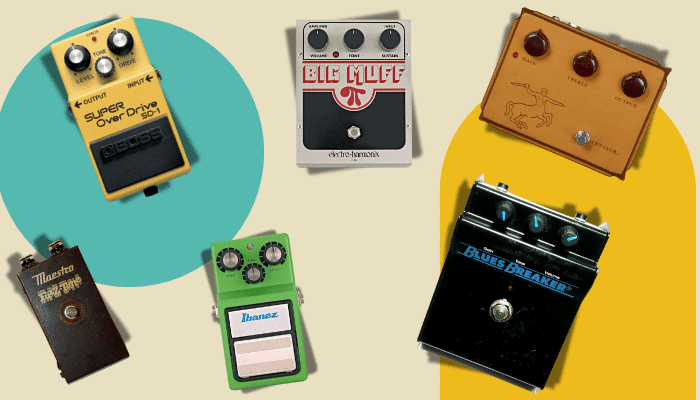
The first Tone Benders were hand-built, maybe a hundred of them in wooden boxes, and sold through Macari’s Musical Exchange on Denmark Street. Brothers Joe and Larry Macari turned it into the Sola Sound brand, and the circuit moved fast: the two-transistor MK1.5 by late 1965, then the three-transistor MK2 in 1966. Vox later put its name on a version, which is why you’ll still see it credited as a Vox pedal. It wasn’t. It was Sola Sound’s.
British players lived on it. Pete Townshend, Jeff Beck, and later Jimmy Page on the first Led Zeppelin record all reached for a Tone Bender when they wanted the snarl.
The Dallas Arbiter Fuzz Face (1966)

The Fuzz Face came out of Arbiter Electronics in 1966 (the Dallas Arbiter name arrived after a later merger), and its circuit is close to the Tone Bender MK1.5 with a few tweaks. Two germanium transistors, often the now-mythologised NKT275. Two knobs. A round grey enclosure that, so the story goes, was modelled on the base of a microphone stand.
It became a legend for one reason: Jimi Hendrix. He ran a Fuzz Face into cranked Marshalls and played it like a second instrument, riding the guitar’s volume knob to move between clean and full snarl. Roll it back and it cleans up. Dig in and it sings. That’s all over “Voodoo Child,” and it’s still there at Woodstock in 1969, howling through “The Star-Spangled Banner.” If you want that sound today, there’s a whole field of Hendrix-style fuzz pedals built to chase it.
The Maestro copied a broken desk. The Tone Bender copied the Maestro. The Fuzz Face copied the Tone Bender. Every fuzz on your board today is a copy of a copy of a fault.
Fuzz Timeline: 1951 to 1966, and What to Listen For
Fifteen years, from a split speaker cone to the fuzz pedals still copied today. Each stop comes with one track, so you can hear the fault turn into a product.
- 1951: “Rocket 88” (Jackie Brenston and his Delta Cats, Ike Turner’s band). An amp falls off the car, the cone splits, and paper gets stuffed in. Listen: the fuzzy, buzzing guitar line under the sax from the very first bars.
- 1958: “Rumble” (Link Wray). Pencil holes in the speaker. Listen: the opening chord. It’s the menace the song is built on.
- July 1960: “Don’t Worry” (Marty Robbins). Grady Martin’s bass goes through a dying Langevin transformer. Watch: how a dying transformer became a sound, on our YouTube channel.
- January 1961: “The Fuzz” (Grady Martin). The likeliest source of the name. Listen: for where the word came from.
- 1962: the Maestro Fuzz-Tone FZ-1. Glenn Snoddy and Revis Hobbs bottle the fault, and Gibson sells it. Listen: to nothing much. Nobody bought it.
- 1964: “You Really Got Me” (The Kinks). Dave Davies takes a razor blade to a speaker while Fuzz-Tones sit unsold in shops. Listen: the opening riff.
- May 1965: “(I Can’t Get No) Satisfaction” (The Rolling Stones). Keith Richards’ horn placeholder sells out the Maestro. Listen to the riff, and imagine it played by brass.
- 1965: the Sola Sound Tone Bender MKI. Gary Hurst modifies Vic Flick’s Maestro. Listen: The Yardbirds, “Heart Full of Soul,” widely credited to Jeff Beck on an early Tone Bender.
- 1966: the Tone Bender MK2 and Arbiter Fuzz Face. The two circuits that pretty much set the template for fuzz. Listen: Jimi Hendrix, “Purple Haze” (1967), the Fuzz Face at full snarl.
Why Your Fuzz Pedal Still Behaves Like a Broken Machine
Back to that sulking Fuzz Face.
Once you know where fuzz came from, its bad habits start to make sense. The Maestro was built to reproduce a component failing under load. The Fuzz Face descends from that idea: two transistors squaring off your signal until it tears. A circuit designed to imitate a fault is going to act a bit faulty. That’s not a defect in your unit. It’s the brief.
You hear it in three places.
The amp. A germanium Fuzz Face isn’t a plug-and-play fuzz pedal. Into a clean, polite amp it can sound thin and fizzy. Mine only really opens up when the amp is doing some work, with a bit of breakup and the EQ and levels sitting right. Hendrix ran his into cranked Marshalls for a reason.
Your guitar. A Fuzz Face reacts to whatever’s plugged into it. Run it first in the chain, straight from the guitar, and the volume knob becomes your gain control: roll it back and it cleans up, dig in and it snarls. Put a buffered pedal in front of it and a lot of that magic goes away.
The transistors. Germanium is warm, smooth and temperamental, and heat changes it. Silicon is brighter, more aggressive and more consistent from one unit to the next. If you want a fuzz that behaves the same every night, go silicon. If you want the original character, bad habits included, go germanium. There’s more on that in our silicon vs germanium fuzz guide.
My own fix for the wool is to run an overdrive after the fuzz. It tightens the low end and gives the fuzz some shape without sanding off what makes it fuzz.
And if you’re tempted by the real thing, a vintage Maestro or an original Tone Bender, bring money. On Reverb they start around $500, and plenty sit closer to $800. You’re paying for the story as much as the sound. Sometimes the story’s worth it.
The temperament isn’t a flaw. It’s the inheritance.
Let It Break
Most of us spend years trying to fix fuzz. We add a noise gate. We buy the clone with six knobs so we can dial out the bit that misbehaves. We tuck it behind three other pedals and then wonder why it sounds like a beehive in a biscuit tin.
Stop. The whole point of fuzz is that something in the chain is coming apart. That’s what Grady Martin played through a dying desk, what Snoddy went to the trouble of rebuilding, and what Hendrix was riding with his volume knob at Woodstock.
So give yours the conditions it was built for. Put it first. Turn the amp up until it’s actually working. Use your guitar’s volume as the gain control. Let it sputter a little at the edges.
If you want to know where effects went after fuzz, our history of guitar effects pedals picks up the story from here.
You don’t need to break anything to get that sound. Your fuzz pedal is already broken. On purpose.