Dynamics and Filtering
Compressor Pedal as Boost: How to Use It for Guitar Solos
A compressor can do far more than tame your dynamics: with the right approach it...
8 min read


Player first, writer second. 25 years of chasing tone, testing gear, and helping guitarists make smarter decisions about the pedals that shape their sound.
I picked up my first guitar at 14 and never really put it down. I studied classical and jazz in Manchester, played in rock bands and folk bands, dabbled in session work, and spent years working in studios (on the desk and as a player). Running a guitar shop in the East Midlands is where my real passion for gear took hold.
The moment I discovered you could stack two overdrives together changed everything. I’d been using every gain pedal in isolation, and realising they could work together opened up a rabbit hole I’m still happily lost in.
Over 25 years of playing, I’ve gigged everywhere from underground rock clubs across Europe to Manchester’s Lowry Theatre. That experience shapes everything I write here. I’m not reviewing pedals from a spec sheet. I’m testing them the way you’d actually use them.
Pedal Players exists to help guitarists cut through the marketing noise and make honest, informed decisions about gear that actually matters for their sound.
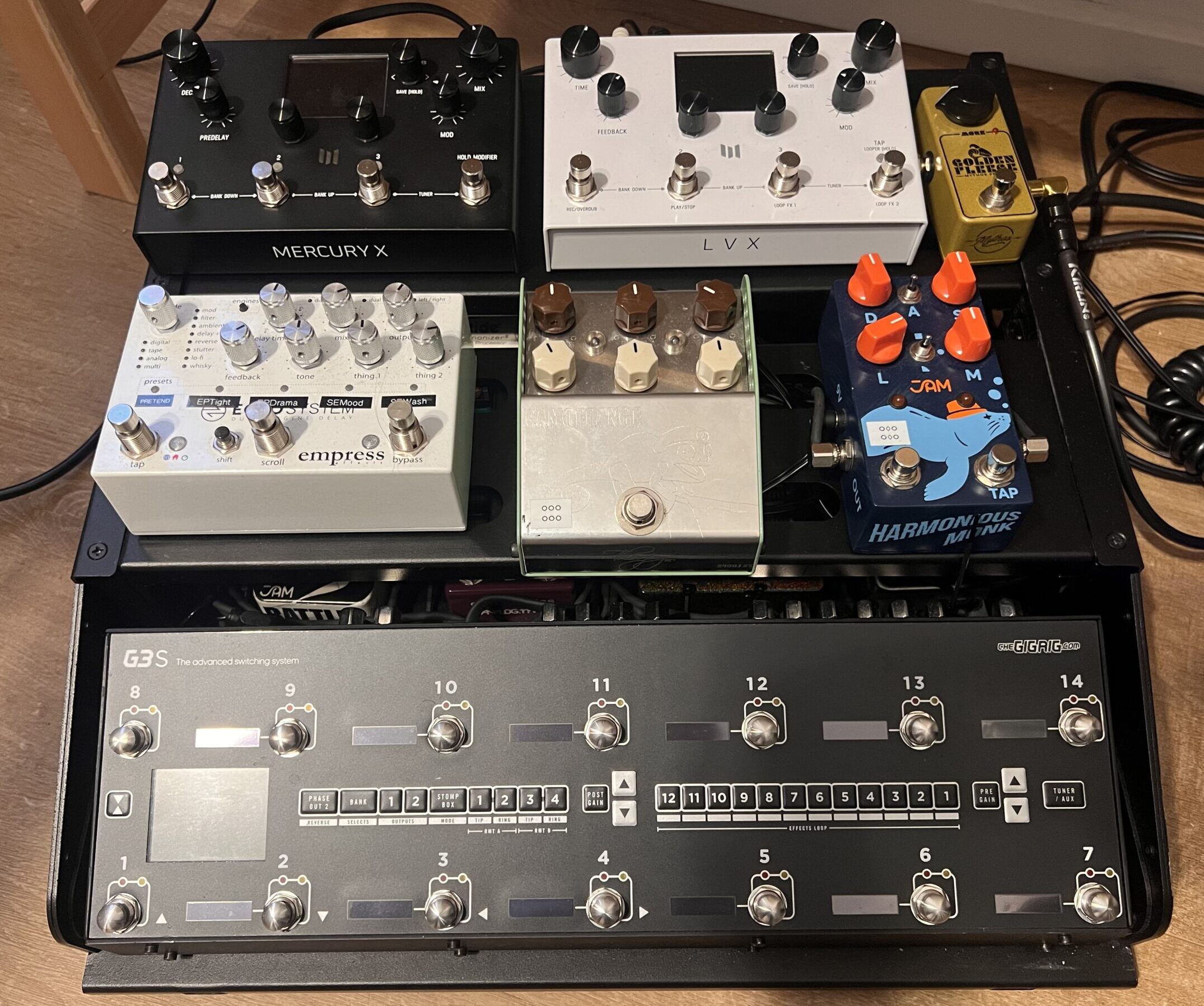
My pedalboard as of March 2026.
Every pedal I review goes through the same framework. Knowing what I prioritise helps you weigh my opinions against your own preferences.
A pedal can have every feature imaginable, but if it doesn't sound good, none of that matters. I evaluate with my ears before I read the spec sheet.
Pedals live on the floor and get stomped on for a living. I value enclosures, switches, and jacks that can handle gigging, touring, and years on a board without falling apart.
Expensive doesn't always mean better. I always consider what you're getting per pound, and I'll say so when a budget pedal punches above its weight.
If you need the manual to figure out what the knobs do, something's gone wrong. I value intuitive layouts and controls that make sense on a dark stage.